Tuesday, 4 June 2013

Upping the game


The recent issuing of licence to destroy buzzard nests to protect released pheasants demonstrates that some very uncomfortable truths about the game-shooting industry need to be outed but also that there is a lack of research evidence about the impacts of large-scale gamebird releases.

Do we know the real figures for the number of gamebirds released in Britain every year? It is estimated that between 40 and 50 million birds (that is pheasants, red-legged partridge and a smaller number of grey partridge) are released into Britain's countryside annually.  While the industry has carried out research into the benefits to the countryside from shooting, perhaps the research has been a little selective? It is all "a question of balance" (the title of a Game Conservancy [now the Game and Wildlife Conservation Trust] publication about its research), so here are my research questions on the impact of these releases, and associated activities (including predator-culling), relevant to wildlife, farming and human health.

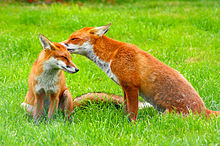
1) What is the impact of providing all this extra easy food on predator populations: i.e. fox, stoat, buzzard
2) What is the impact of predator-culling on their prey; and if this has an impact on those species, what is the effect? e.g. rabbit populations and impact on agricultural crops, whether grass or arable; is there an economic impact, if so, what is the cost and who bears this cost?
3) How many road traffic collisions are caused by drivers crashing into or swerving to avoid released gamebirds? What are the death and injury statistics? (I sadly remember a 17-year old who died because he swerved to avoid a pheasant when on his motorbike). What is the cost to the insurance industry and to the NHS? What are the social and economic costs to the impacted families who have been bereaved or injured?

Raptors have increased, but the recent request for a licence to destroy buzzard nests is just the beginning of what the game industry really wants, which is to get rid of more buzzards, shortly followed by ravens (nicely recovering after a century of absenteeism from large swathes of Britain) and red kites. In some parts of the countryside foxes are already very scarce, as shoots do not tolerate them and it is very clear from this that a substantial number of gamekeepers and shoot managers (and their landlords) will only be happy when they can see no raptors in the sky. Where will it stop? Surely, it's time to put the brakes on the game industry, not recovering wildlife. It is now time for those who love the countryside and its wildlife to up their game.


Friday, 12 April 2013

Signs of spring

Hooray, those sharp east winds have disappeared for the time being. This year's prolonged winter has many implications for wildlife, farming and food production. First, the wildlife. Spring migrants are late to arrive but I heard the first chiffchaff on Wednesday. Their arrival is about two weeks later than normal. The wild daffodils, usually at their peak around 8 March, were still at their best last weekend - one month later than normal. The cold weather has kept them in splendid 'suspended' animation. Barn owls will probably be suffering. At this time of year the females need to be nice and fat, ready to lay eggs, but insects and voles are probably scarcer, so the barn owls will either delay breeding, lay fewer eggs or perhaps be less fertile.

Farmland wildlife may also benefit from the huge acreage of uncultivated land that was too wet to plant last autumn and now, it is is too late to plant for this year. Many fields will need to remain fallow or planted up with a green manure, so will not be producing wheat, barley or oilseed rape this year. A lot of the oilseed rape has also failed - either eaten by slugs or pigeons. Meanwhile, take a minute to think about the challenges faced by upland farmers who have had to dig their sheep out of 7-foot snowdrifts.

For those of us with veg patches or allotments it has been too cold to get seeds going, so our growing season may be shorter - unless we have a nice mild autumn. Time will tell but I plan to get digging this weekend, (followed by a visit to the local  back man on Monday!).

Thursday, 9 February 2012

Fewer flowers, where are the bees?

This photo shows one of the field-scale projects that I have supplied
seed for.  This 15 hectare field was sown with wild flower and
grass seed in 2004. Although the soil was in a very poor state after
having been 'mined' for arable crops for 30 years, the flowers
eventually 'took off' after about 5 years and are spreading every
year. It is topped in late summer and sheep-grazed in autumn, but
now would benefit from some summer cattle-grazing.
Before it was ploughed up in the 1970s this field grew very
good suckler beef. It could once more..


Sarah Raven's excellent new series, Bees, Butterflies and Blooms began transmitting yesterday on the BBC. The first programme featured what's happened to the countryside in past decades, whether village greens or farms, and showcased some positive stories of a farmer and rural community restoring wild flowers around an arable field and on the village green. Yours truly had a minor role, sweating it out on the hottest day in 2010 (you won't see the sweat, carefully edited out) in a Sussex wild flower meadow. Sarah and I agree that our wild flowers are in serious trouble in the countryside. Both of us and others, continue to play our part in getting some of them put back, but the truth is that much of the countryside, whether grassland  or arable land, is wildlife-poor desert devoid of most of the wild flowers which were abundant 50 years ago. Like Sarah says, we can't turn the clock back, but things could be a lot better (sometimes with little effort or cost).

The wild flower restoration charity, Flora locale, with which I am still associated as Technical Adviser, offers really good days out, showcasing methods for restoring wild flowers and their habitats across the UK. This year there are many rural-based events but also some on wildlife gardening and improving wildlife in towns. So, if anyone other than me reads this blog and wants to learn more, then why not visit the website and see what events are on offer this year?

Monday, 30 January 2012

More climate lies

Yesterday, David Rose, writing in the Mail on Sunday said 'Forget global warming'. Rose said new data from the Met Office showed that "the release of new temperature data showing the planet has not warmed for the past 15 years". He also said the figures "suggest that we could even be heading for a mini ice age" and that they also confirm that "the rising trend in world temperatures ended in 1997". Unsurprisingly the Met Office has issued a press statement confirming that Rose's assertions are no more than a pack of lies. Although 'pack' and 'lies' are two words not actually used in the MO statement, the word 'belief' is. 

Unsurprisingly this figure from the Met Office was
not published, if it had it would have clearly
shown that Rose's assertions were pure fabrication
on his part.
Undoubtedly Rose is a climate sceptic wishing to use his privledged position, as a journalist writing for one of Britain's most-read Sunday newspapers, to push his belief on to others who do not have the time or mental capacity to understand the complexities of global warming. This makes it ever more harder to convince ordinary people that climate change is real, a threat to the future of their children and grandchildren and that they have a part to play in doing something about it.

The Mail on Sunday does not have a good track record in telling the truth about climate change having published other features that encourage its readers to believe it isn't happening. This is not the only newspaper that regularly fails to tell the truth, or 'massages' storylines to peddle some kind of belief that fails to acknowledge evidence. So I was quite interested to find the Angry Mob website. Unsurprisingly, much of this excellent blog is aimed at the appalling catalogue of journalistic misinformation churned out by the Daily Mail and its sister newspaper. 

Back to Rose's assertions and the truth - the Met Office says it  "is absolutely clear is that we have continued to see a trend of warming, with the decade of 2000-2009 being clearly the warmest in the instrumental record going back to 1850". Don't bother to get the sledges out then, buy the suntan cream, collect rainwater and don't live in a place that is less than 10 metres below sea level.


Monday, 23 January 2012

Hedgerow management

So, are farmers are all doing a good job in looking after our countryside? Well, the answer to that is some are, but some are not. Unfortunately, it is the case that the way many hedges are managed is both bad and prehistoric, both in action and attitude. The outcome is bad for the landscape, bad for wildlife and bad PR for the farming community at large . The picture on the left, taken this winter, says it all. This is part of a Devon roadside hedge and is just one example of how many hedges are still flailed annually within an inch of their lives.

Another 'hedge' being flailed into oblivion,
near Great Shefford, West Berks
We knew about how to manage hedgerows well decades ago - using chamfered cuts, allowing the hedge to grow taller and by cutting less-frequently. Over that time, successive government agencies and others have given thousands of talks, walks and advice on the matter. So those who continue to manage their hedges in such a crap way  can't claim ignorance. You would also think that whoever pays to have the hedgerow cut, would work out for themselves that their bottom line could be a tad healthier if their hedges were less-regularly cut. My only conclusion is that those who are responsible for "managing" hedges like the illustrated examples must be severely lacking in brain cells or they just don't care.

Of course such hedgerow mismanagement is terrible PR for the farming industry at large and an indictment of the Common Agricultural Policy, particularly the Cross Compliance requirements which do nothing to prevent inappropriate hedgerow management, while the Entry Level Stewardship scheme just allows farmers pretty well to carry on with what they have done before, whether good or bad.

The good news is, that, by restoring good hedge-management some of the farmland birds currently continuing to decline will return - such as Yellowhammer and Bullfinch, especially if at the same time farmers maintain and restore good-sized areas of flower-rich habitat.

Good hedge management isn't rocket science but those who continue to do the opposite should be outed and, under CAP reforms, such individuals and businesses should (in my view) lose their eligibility to receive any taxpayers' money to keep them in farming. There are plenty of others willing to take their place who would love to farm and manage our countryside in ways that are in harmony with the landscape and nature.

Link to hedgelink

Friday, 30 December 2011

Ups and downs, stuff etc.

Am I alone in having suffered the pre-Christmas droop and now the post-Christmas blues? Or is it that being compiler of British Wildlife mag's Conservation News, an ecologist and now into sustainable building - I can't do anything or go anywhere without seeing how people have messed up either the natural or built environment. One of the biggest downers as I perambulate the locality (Newbury) are supermarkets and high street stores full of stuff that we already have, knowing full well that old stuff that people have is actually quite new stuff and most of it (the old new stuff) probably ends up in the local tip. (In contrast I am greatly cheered by the shadow retail economy of charity shops.) Then there's the wider economy - based on printing money and creating debt (see the excellent Money is Debt, but be further depressed), and the exponential replacement of people with machines - whether in farming or supermarket checkouts. Is it no wonder there will be a projected 2 million unemployed in 2012?


Be assured that my next blog will be focusing on happy things, to start the New Year off with a glowing warm feeling, and on that note I wish anyone who has bothered to read my babble a healthy, happy and profitable 2012. (A New Year's resolution is to post a new blog at least once week ..)

Thursday, 8 December 2011

The Green Deal and climate change

On Tuesday I attended a meeting about the Government's Green Deal, which will provide a financing package to homeowners and business for 'super-insulating' their properties. The finance package means up to £10,000 will be available to make houses warmer, especially those with solid walls which cannot be cavity-filled. This is a novel scheme as the 'loan' will actually be a charge against the property, not a debt to follow the person living in the property. It will be repaid through a charge on the electricity meter. Making our houses use less energy is essential if the UK is to meet its carbon reduction target (an 80% reduction on 1990 emissions).

A big problem is we won't reach these targets because our emissions are now about 30% MORE than they were in 1990 if you count the emissions which we have exported because we don't make stuff now, and instead import it from China. So some of China's emissions are actually ours and we should count them (but do not). In my humble opinion, the only way we are going to prevent dangerous climate change is if we are able to invent a gizmo that sucks CO2 out of the atmosphere and turn it into something inert. Human's are stupid but also very clever. So let's hope someone invents the CO2 sucker sooner rather than later.